Wallpaper vs Paint Cost: Which Option Is Better?
If you are comparing wallpaper vs paint cost, the short answer is simple: paint is usually cheaper upfront, while wallpaper usually costs more to buy and install.
The harder question is which option gives you better value for your room, your budget, and your long-term plans.
Paint is often the easier choice when cost, speed, and flexibility matter most. Wallpaper usually costs more at the start, but it can last longer and create a finish that paint cannot always match. That means the better option depends on whether you care more about upfront cost, long-term durability, easier maintenance, or stronger design impact.
This guide breaks the decision down in a clear way so you can choose the option that fits your walls and your goals.
Is Wallpaper Cheaper Than Paint?
Most of the time, no.
Paint is usually cheaper when you only look at the initial cost. Wallpaper usually costs more because the materials are more expensive, the installation is more detailed, and the wall often needs better prep before the finish goes on.
That said, lower upfront cost does not always mean better long-term value.
Wallpaper can last longer in the right room and may not need to be replaced as often as painted walls need to be repainted. So if you are asking which option is cheaper today, paint usually wins. If you are asking which option may hold its look longer in the right setting, wallpaper can sometimes offer better long-term value.
A simple way to think about it is this:
- Paint is cheaper upfront
- Wallpaper usually lasts longer
- Wallpaper may offer better long-term value in the right room
- The better choice depends on whether you mean initial cost or long-term value
Wallpaper vs Paint: Quick Verdict
- Paint is cheaper upfront
- Wallpaper is usually more durable
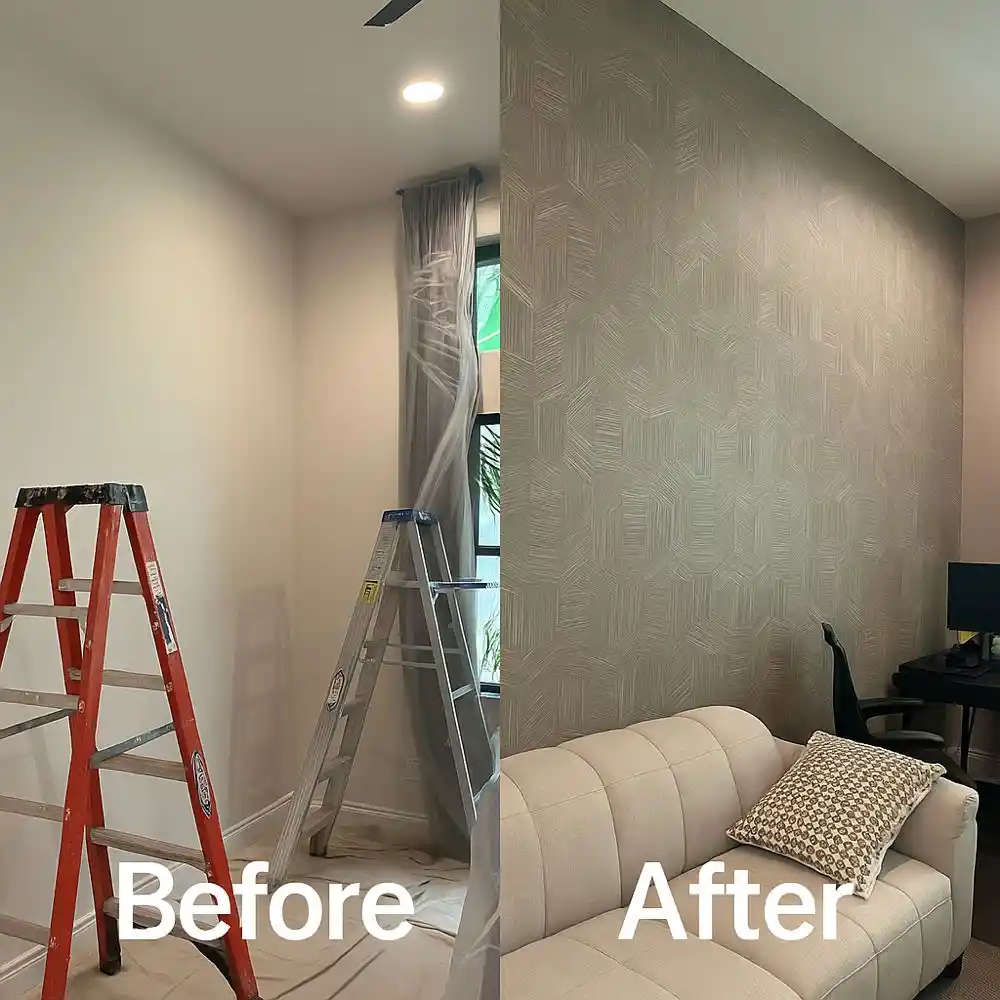
- Wallpaper can be the better long-term choice in low-touch decorative rooms
Wallpaper vs Paint Cost Comparison
| Factor | Wallpaper | Paint |
|---|---|---|
| Material cost | Higher | Lower |
| Installation cost | Higher | Lower |
| Labor complexity | More complex | Simpler |
| Touch-up cost | Harder | Easier |
| Lifespan | Longer | Shorter |
| Style flexibility | High | Very high |
A simpler budget view looks like this:
| Cost Category | Wallpaper | Paint |
|---|---|---|
| Upfront budget | Higher | Lower |
| Easy refresh later | Lower | Higher |
| Long-term decorative value | Higher in the right room | Lower if frequent repainting is needed |
| Repair convenience | Lower | Higher |
This is why the comparison is not just about price. Wallpaper usually costs more to install, but paint often needs more frequent refreshing over time.
What Makes Wallpaper More Expensive?
Wallpaper usually costs more because both the materials and the labor are more specialized.
The wallpaper itself can range from budget options to premium designer products. Then you still have to consider adhesive, wall prep, layout, trimming, seam work, and the time it takes to install it cleanly. If the pattern needs to line up across multiple drops, labor becomes even more detailed.
Wallpaper also depends heavily on surface quality. If the wall is rough, glossy, damaged, or uneven, more prep may be needed before installation can begin. That prep can raise the total cost even before the first strip goes up.
Future removal can also add cost later. So the higher price is not just about buying wallpaper. It is about the full installation system around it.
If the wall is rough enough that the surface needs correction first, look at skim coating and plastering before moving forward with wallpaper.
Why Paint Is Usually Cheaper
Paint is usually cheaper because the materials cost less, the process is faster, and the labor is simpler.
Most painted walls need less specialized installation work than wallpapered walls. Prep still matters, but the process is usually more forgiving. Paint is also easier to patch, easier to refresh, and easier to change later if your style changes.
This is one of the biggest reasons paint stays the default choice for budget-conscious projects. It is practical, flexible, and usually faster to complete.
Paint also gives homeowners more room for error. If something needs a touch-up later, the fix is usually much easier than repairing wallpaper.
If your main goals are lower initial cost, easier updates, and simpler upkeep, paint usually makes more sense.
You can compare service options on our interior painting page.
Wallpaper Durability vs Paint
This is one of the biggest decision points.
Wallpaper often lasts longer than painted walls when it is installed correctly and used in the right room. That is one reason some homeowners accept the higher upfront cost. They want a finish that holds its look for years without regular repainting.
Paint, on the other hand, is easier to refresh but often shows scuffs, chips, fading, and wear sooner. In rooms that stay fairly calm and decorative, wallpaper can hold up very well over time.
That does not mean wallpaper is automatically better. Durability also depends on where the finish is used.
Wallpaper is usually a stronger long-term decorative choice in:
- bedrooms
- dining rooms
- feature walls
- home offices
- lower-touch living spaces
Paint is often the more practical choice in spaces where walls are bumped, cleaned, or changed more often.
So if your question is strictly wallpaper durability vs paint, wallpaper often wins in the right setting. If your question is which finish is easier to live with in a more active room, paint often wins.
Wallpaper vs Paint: Maintenance and Repairs
Paint is easier to maintain. That is one of its biggest practical advantages.
If a painted wall gets chipped, scuffed, or marked, you can often touch it up without redoing the entire wall. That makes paint easier to live with in homes with kids, pets, frequent furniture movement, or routine wear.
Wallpaper is different. If it tears, bubbles, peels, or gets damaged, patching it cleanly is much harder. In many cases, the damaged section has to be replaced, and matching the pattern or seam is not always easy.
So while wallpaper may last longer in the right room, paint usually wins on repair convenience.
That tradeoff matters. Wallpaper is often better for long-term visual impact. Paint is often better for easy maintenance and easier fixes when something goes wrong.
If the room is likely to take frequent abuse, paint is usually the safer and more forgiving option.
Replacing Paint with Wallpaper: What to Know
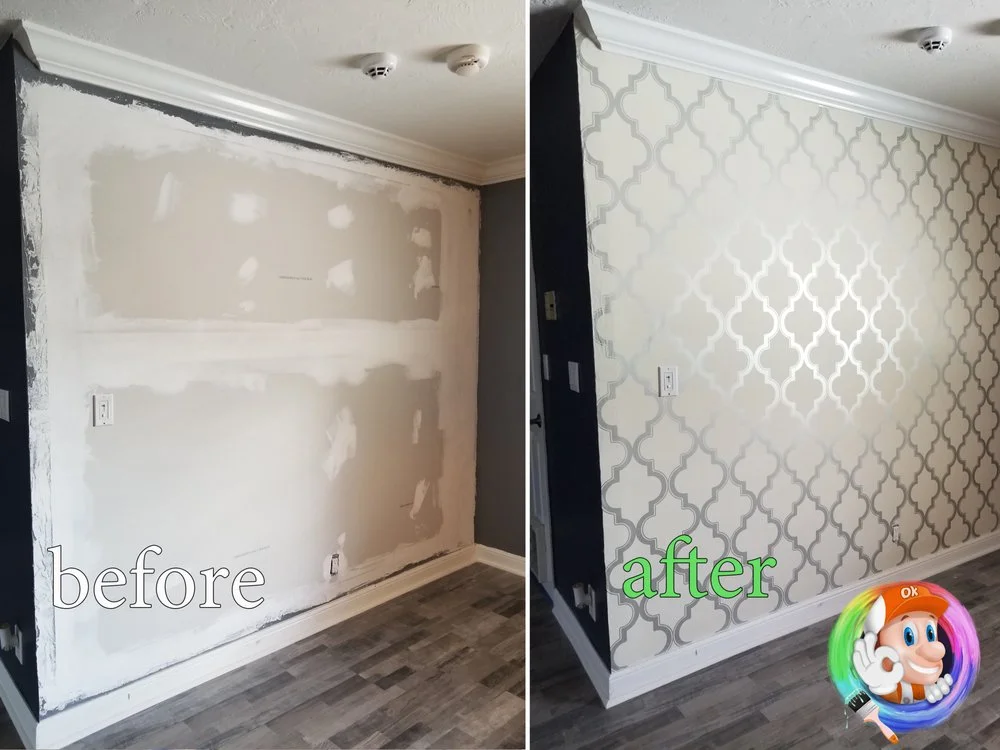
Yes, you can install wallpaper over a painted wall, but only if the surface is properly prepared.
This is one of the most important parts of the decision, and many comparison pages do not explain it well. The real question is not just whether wallpaper can go over paint. The real question is whether the painted wall is smooth, clean, stable, and ready for adhesion.
Wallpaper usually performs best when the wall is:
- smooth
- clean
- dry
- stable
- free from peeling paint
- free from heavy texture
- not damaged or glossy in a way that weakens adhesion
If the painted wall is rough, loose, damaged, glossy, or uneven, the surface may need prep first. That may mean cleaning, sanding, patching, or more involved wall correction.
This is where skim coating vs plastering becomes relevant. If the wall is rough enough, smoothing it first may be the difference between a clean wallpaper finish and a poor one.
So yes, replacing paint with wallpaper is possible. The key is not the old paint itself. The key is the condition of the wall under it.
When Wallpaper Is the Better Choice
Wallpaper is usually the better choice when you want stronger design impact and longer-lasting decorative value.
Wallpaper makes more sense when:
- you want a premium decorative finish
- the room is lower-traffic
- you want pattern, texture, or a statement wall
- you want the finish to last for years
- you are comfortable with a higher upfront cost
Wallpaper is also a strong choice when the room is meant to feel more custom or more visually layered than paint alone can create.
If the goal is personality, texture, or a more elevated design look, wallpaper often has the advantage. It gives you options that standard paint usually cannot match on its own.
For direct installation help, visit wallpaper installation.
When Paint Is the Better Choice
Paint is usually the better choice when budget, flexibility, and easier maintenance matter most.
Paint makes more sense when:
- budget is the main concern
- you want easier changes later
- you need a quicker turnaround
- the room gets frequent wear
- you want the simplest maintenance plan
- the wall surface is not ideal for wallpaper
Paint is also the safer option in rooms where moisture, cleaning, or future changes are likely to matter. It is easier to refresh, easier to touch up, and usually easier to live with over time.
If your goal is a finish that is simple, practical, and easy to update later, paint is usually the better fit.
Frequently Asked Questions
Is wallpaper cheaper than paint?
Usually, no. Paint is generally cheaper upfront, while wallpaper usually costs more in both materials and installation.
Does wallpaper last longer than paint?
Often, yes. Quality wallpaper can last much longer than paint in the right room, especially where moisture and wear are limited.
Which is easier to maintain, wallpaper or paint?
Paint is easier to maintain because it is easier to touch up and repair. Wallpaper can last longer, but damage is harder to patch cleanly.
Can you replace paint with wallpaper?
Yes, if the painted wall is properly prepared. Smooth, stable, clean walls are much better for wallpaper than rough, loose, or damaged surfaces.
Is wallpaper harder to remove than paint?
Yes, in most cases. Wallpaper removal can be labor-intensive, especially if the paper is older or strongly adhered.
What is better for a bedroom, wallpaper or paint?
Either can work well. Wallpaper is strong for a feature wall or more decorative look, while paint is usually better if you want easier maintenance and easier future color changes.
What is better for a high-traffic room?
Paint is usually more practical because it is easier to repair and refresh. Wallpaper can still work, but visible damage is harder to fix cleanly.
Does wallpaper need special wall prep?
Yes. Smooth, clean, and properly prepared walls give wallpaper the best chance to adhere well and look right.
Need Help With Wall Prep or Finishing?
If your walls need smoothing before wallpaper, paint, or another finish goes on, start with the surface first. You can learn more about skim coating and plastering, compare wall-prep decisions in skim coating vs plastering, or review our interior painting page if paint is still the better fit for your room.